
Tooth Extractions – San Ramon, CA
Removing Pearly Whites to Protect Oral Health
Helping your child maintain a beautiful smile not only helps boost their self-confidence but can also improve their chances of having greater oral health in the long run. While our goal is to preserve their natural teeth for as long as possible, sometimes a smile can become greatly affected by decay or severe damage. If your teen or child’s tooth shows indications that it can turn problematic for the rest of their smile, then our team might recommend tooth extractions to save the other pearly whites. Read on to learn more about this treatment or give us a call to schedule their consultation.
Why Choose Gale Ranch Pediatric Dentistry & Orthodontics of San Ramon for Tooth Extractions?
- Sedation Dentistry Available for Optimal Comfort
- Professional, Reliable, & Compassionate Dental Team
- Dental Insurance & Financing Welcome
Reasons Why Tooth Extractions Are Necessary

It’s important to note that our team at Gale Ranch Pediatric Dentistry & Orthodontics will do everything we can to preserve your child’s natural adult teeth for as long as possible. During their consultation, we will evaluate their oral health and assess their affected tooth to see if it can lead to more serious issues in the future, such as an oral infection. Here are some of the reasons our team would recommend extracting your child’s tooth for the safety of the rest of their smile:
- Their tooth is significantly damaged and cannot be salvaged with a root canal or dental crown.
- They have severe decay that can potentially spread to other teeth.
- They have a baby tooth that isn’t falling out by itself and is in the way of the permanent one underneath.
- They need to undergo orthodontic treatment and require space in their smile due to overcrowded teeth.
The Process of Removing a Tooth

Our team will thoroughly evaluate your teen or child’s smile to determine the proper kind of tooth extraction procedure needed. Should they have a partially erupted tooth, we might be able to remove it without the need for scalpels. Regardless, we will first numb your child’s mouth completely with a local anesthetic so that their treatment process is painless. We could even offer sedation options to further minimize discomfort as well as keep them relaxed.
Once we know your child is comfortable, we can begin using our dental instruments to elevate the tooth from the socket while carefully shifting it back and forth until it comes out. If this isn’t possible or their tooth is impacted, we can instead use special tools to open the gum tissue to access the tooth under the gum line. If necessary, we may have to strategically divide the tooth into pieces to remove them safely.
Tooth Extraction Aftercare

After your child goes back home to heal, you’ll want to encourage them to follow our specific aftercare guidelines for proper recovery. These should include:
- Get plenty of rest and keep their head elevated to avoid blood going to their head
- Minimize bleeding with clean gauze
- Refrain from sucking, spitting, or using a straw to avoid disturbing the blood clot around the surgical site
- Eat soft foods for a few days, like mashed potatoes and soup, to avoid chewing or biting down
- Take over-the-counter/prescribed pain relievers to reduce discomfort while using a cold compress to alleviate swelling
Understanding the Cost of Tooth Extractions

When your child needs a tooth extraction, we understand that money is likely the last thing on your mind. However, because there are many factors that can influence the cost, we cannot charge a flat fee for this treatment. The best way to get an accurate quote is to bring your child in for an in-person exam, where you and their dentist can discuss the details of the procedure including the price. In the meantime, feel free to click the link below to familiarize yourself with how we’ll determine the cost once you do.
Factors That Can Affect Tooth Extraction Cost
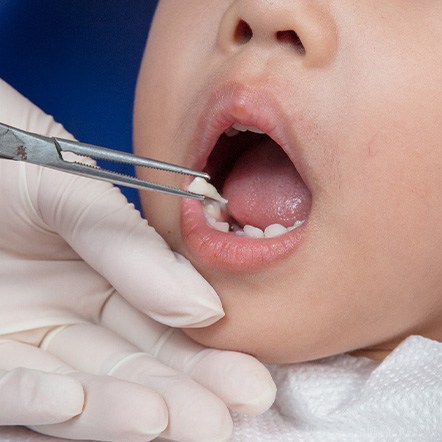
There are many factors that can affect the cost of a tooth extraction, which is why it’s so important to visit us for a consultation with your pediatric dentist in San Ramon. These include:
- Which tooth or teeth need to be removed, and where in the mouth they’re located.
- How difficult it will be to extract the teeth, and if it will be necessary to include an oral surgeon in the procedure.
Does Dental Insurance Cover Tooth Extractions?
Yes, in many cases dental insurance will cover a child’s tooth extraction. In most cases, coverage is around 50%, although this can vary depending on whether you’ve met your deductible, or if your plan has any waiting periods or other limitations. Sometimes, plans will restrict the number of teeth they’ll cover, but it all depends on your individual plan. If you need help confirming your coverage or have any questions about the amount of coverage your child will receive, please let us know and we’ll be happy to assist you!
Other Options for Making Tooth Extractions Affordable

In addition to warmly welcoming your family’s dental insurance, we are pleased to accept flexible payment plans through our trusted third-party lender, CareCredit. This program allows parents the ability to split up the cost of their child’s treatment into multiple, low or no interest monthly payments that may be more ideal to their family’s budget. To learn more about CareCredit or to apply online, visit our website for additional information.
At Gale Ranch Pediatric Dentistry & Orthodontics of San Ramon, we’re here to help make your child’s tooth extraction as easy and stress free as possible. If you have any questions or concerns about any aspect of this important treatment, please don’t hesitate to contact us and we’ll do our best to assist you as quickly as possible.
Tooth Extraction FAQs
How Long Does a Child’s Tooth Extraction Take?
In the majority of cases, children’s tooth extractions don’t take very long. When you arrive, we will walk you and your child through the procedure so that you know exactly what to expect. We will then numb your child’s mouth with a local anesthetic. Depending on their needs, sedation may also be used. Once they are comfortable and relaxed, the extraction should only take a few minutes.
Why Does a Baby Tooth Need to Be Extracted?
You may be wondering why your child’s baby tooth needs to be extracted. Won’t it fall out naturally on its own? Teeth that are irreparably broken, severely decayed, or seriously infected need to be removed to preserve the health of the rest of their smile. The problematic tooth will likely come out on its own eventually, but it could take months, or even years. This means discomfort for your child and potential issues to the surrounding teeth. Ultimately, if your child’s dentist recommends and extraction, they have good reason for it.
How Should I Prepare for My Child’s Tooth Extraction?
Preparing for your child’s tooth extraction is just as important as following their aftercare instructions. Before your child’s procedure, make sure to ask their dentist about any questions that you have, like what to bring and what to feed your child the morning of. If their dentist has specific instructions, like sticking to just water in the morning or picking up prescription medication, you should do this ahead of time.
What Should You Do After Your Child’s Tooth Extraction?
After you take your child home, it is important for them to get plenty of rest. This is essential to ensure that their body heals and recovers quickly. They should avoid strenuous activities in the first 24 hours. To prevent dry socket, make sure that the gauze pads are placed as instructed, provide your child with plenty of water, and don’t give them straws with their beverages. They should enjoy only soft foods initially, like yogurt, applesauce, and mashed potatoes. Give them their over-the-counter and prescribed pain relievers as directed.
Does It Hurt to Get a Tooth Extraction?
The idea of having a tooth extracted can be scary – especially for children. The good news is that with modern dental techniques and technology, your child shouldn’t feel any pain during their procedure. The area is numbed with a local anesthetic ahead of time, and sedation options are also available for additional comfort. They will feel some soreness for a few days following their procedure, but this can be managed with their over-the-counter and prescribed medications, as well as at home remedies, like cold compresses and saltwater rinses.